


 EFFector Volume 38, Issue 16👮 Flock Searches for the LOLsWelcome to an all-new EFFector, your regular digest on everything digital rights from the Electronic Frontier Foundation. In our 851st issue: A settlement enshrining Meta's harmful surveillance into law, states push back against ALPR, and how police are treating mass surveillance like a joke. |
|---|
|
When you lose your rights online, you lose them in real life. Become an EFF member today! |
|---|
The High Crime of 'LMAO': Cops Are Treating Mass Surveillance Like a Joke
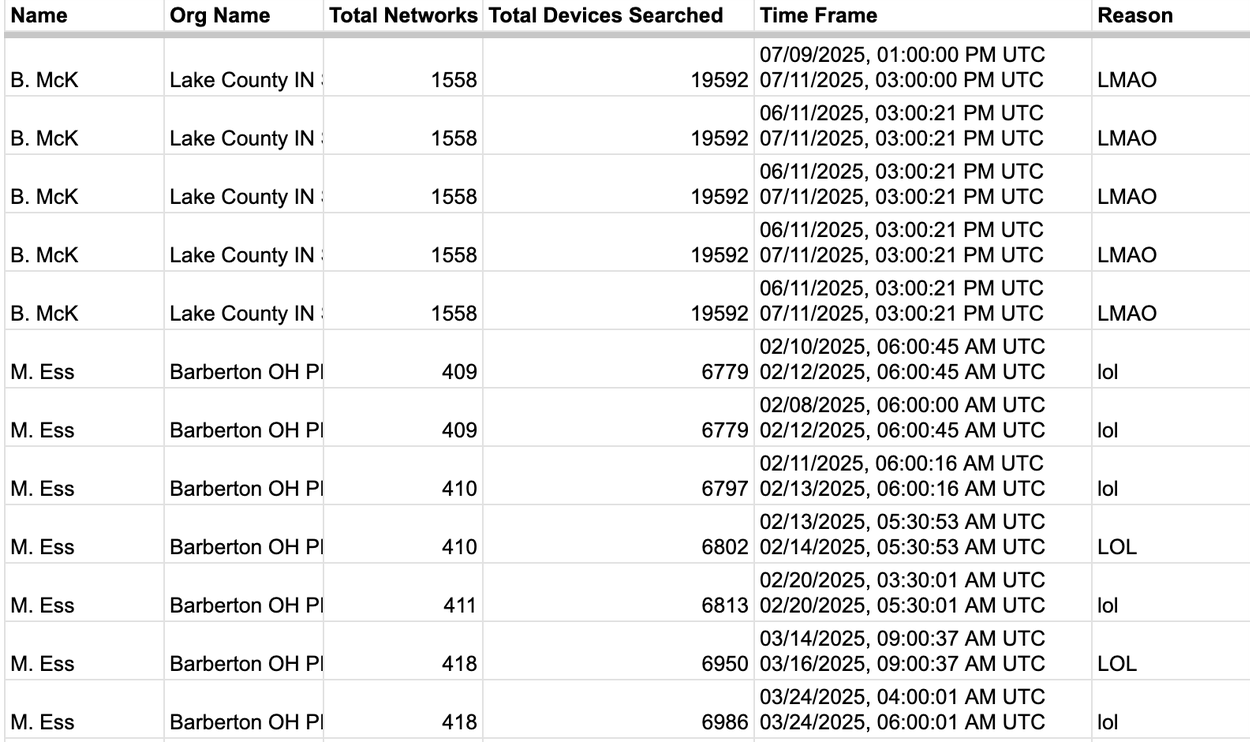
Why did an officer in Goshen, Indiana, search through data drawn from more than 80,000 Flock cameras on May 7, 2025? If your answer is "I don't know," that's 100% correct. The officer simply left the letters "idk" in the text field where cops are supposed to document the reasons for their searches. And police in Indiana aren't alone. A new EFF investigation has found that officers across the country are routinely logging completely nonsensical "reasons" for their automated license plate reader (ALPR) searches, including "LOL," "LMAO," and even (yuck) "Sexy." EFF’s analysis of Flock Safety’s ALPR search data obtained through public records requests has uncovered a disturbing trend. In the absence of judicial oversight, dozens of police departments are inputting ridiculously unserious terms to justify their searches. Here is just one snapshot of what police consider a "reason" to track someone’s vehicle: With no warrant requirements, limited guardrails, and deficient audit processes, automated license plate readers (ALPR) have fostered a culture of unrestricted access to everyone’s location information. This culture of abuse has allowed police to treat a mass surveillance network like their own personal search engine, permitting the tracking of the movements of everyday citizens for low-level complaints, personal whims, and sometimes, seemingly, for the lols. When confronted with these flagrantly unserious searches by EFF, some police departments offered bureaucratic deflections or excuses. Others didn't respond at all. But if police want the power to track a person's movements, they should have to go to a judge, demonstrate probable cause, and get a search warrant. They should not be able to bypass the Constitution with a search for "haha."
EFF Updates👤 META SETTLEMENT: In August, Meta agreed to pay up to $17 billion to settle a child safety lawsuit with 52 U.S. states and territories. This settlement is a bad deal for teens and all social media users. It normalizes age gating and age assurance for millions of internet users. It denies teens the tools to create their own safe experiences online. And instead of addressing Meta’s collection, analysis, and retention of teen's data, this settlement enshrines Meta's harmful surveillance into law. 🦜 FLOCK OFF: Texas and Florida recently announced important state actions dealing a big blow to ALPR networks. This good news is just part of the growing tide of public opposition to mass surveillance. After years of successful grassroots battles to pull these cameras from local streets, bipartisan momentum is sweeping the country. According to one count, 90 communities dropped Flock in August alone. 🚫 SOCIAL MEDIA BANS: Last week, California Gov. Gavin Newsom signed AB 1709, a functional ban on young people under 16 using social media, into law. Using technology is how we learn and build community in today’s world. Laws like AB 1709 instead cut young people off from essential information and experiences. That particularly harms those already facing increased challenges, who often find safety in supportive online communities that they can’t always access in the physical world. 🏆 EFF AWARDS: EFF is pleased to announce that Access Now, 7amleh – The Arab Center for the Advancement of Social Media, DeFlock, and New Media Rights have received 2026 EFF Awards for their vital work in ensuring that technology supports freedom, justice, and innovation for all people. Supporting a global community advancing digital rights, defending digital access in crisis zones, empowering communities to take action against surveillance, and providing free legal assistance for creators and consumers to fight back against digital threats are high callings that help bring about a better tech future for all. |
|---|
Support the Electronic Frontier Foundation
We're making sure technology serves all people—not just the powerful. Your contribution funds the attorneys, activists, and technologists who defend privacy, free expression, and human rights online—for everyone. Since 1990, EFF has led the charge for your digital rights. We're powered by members, and we need you in this fight. |
|---|

Fresh EFF Gear Is Here
Show off your support for EFF with hot digital rights merch from our online store. Just in: an EFF circuit-board brain sticker with a textured finish that's as distinctive to touch as it is to look at. In addition to EFF shirts and hoodies, we have a wide variety of freedom-supporting swag in stock, including (extremely popular) liquid core gaming dice, HTTP playing cards, and a tactile Lady Justice braille sticker. |
|---|
AdministriviaEFFector is a publication of the Electronic Frontier Foundation. Editor: [email protected] Membership and donation queries: [email protected] General EFF, legal, policy, or online resources queries: [email protected]
Reproduction of this publication in electronic media is encouraged. MiniLinks do not necessarily represent the views of EFF.
About EFFThe Electronic Frontier Foundation is the leading nonprofit defending online civil liberties. We promote digital innovation, defend free speech, fight illegal surveillance, and protect rights and freedoms for all as our use of technology grows. Find out more at https://www.eff.org/.
This message is printed from 100% recycled electrons. EFF appreciates your support and respects your privacy.
|
|---|
